
2027 Chevrolet Bolt near Ruth, NC
The 2027 Chevrolet Bolt is a compact electric hatchback that combines a 65-kWh lithium iron phosphate battery with a single permanent-magnet drive motor and an EPA-estimated 262 miles of range on a full charge. Its updated electrical architecture supports DC fast charging at more than 150 kW, AC charging at up to 11.5 kW, a native North American Charging Standard port, and vehicle-to-home bidirectional capability. The 2027 Chevrolet Bolt also features an advanced X76 electric drive unit, blended regenerative braking, and a GM Energy Recovery heat pump system that manages cabin and battery temperatures. Inside, two large digital displays, Google built-in, configurable vehicle information, expanded storage, and available comfort equipment support daily usability. Its technical package also includes compact chassis dimensions, flexible cargo capacity, and more than 20 standard safety and driver-assistance features.
Electric Powertrain, Battery, and Driving Range
The 2027 Chevrolet Bolt uses an integrated electric propulsion system designed to manage energy efficiently while providing practical output for everyday driving. Its single permanent-magnet motor produces 210 horsepower and 169 lb-ft of torque through an integrated gearset. A final-drive ratio of 11.59:1 transfers the motor’s output to the driven wheels. The rechargeable energy storage system provides 65 kWh of rated energy and uses lithium iron phosphate chemistry with prismatic can cells. Together, these components support an EPA-estimated driving range of 262 miles on a full charge.
Advanced X76 Electric Drive Unit
GM developed the X76 electric drive unit in-house with an emphasis on driving range, energy use, and manufacturing efficiency. The permanent-magnet motor uses minimal rare-earth materials while maintaining the required operating characteristics. Segmented magnets help manage heat buildup and reduce energy losses within the drive unit. Silicon carbide inverter materials further limit losses as electrical energy moves between the high-voltage battery and the motor. The 2027 Chevrolet Bolt uses an advanced version of the X76 unit that benefits from continued development and extensive physical and virtual testing.
Thermal Management and Regenerative Braking
A GM Energy Recovery heat pump system provides active heating and cooling for the passenger compartment and high-voltage battery. This integrated HVAC arrangement supports cabin comfort while helping the battery remain within an appropriate operating temperature range. The 2027 Chevrolet Bolt also uses a blended regenerative braking system that prioritizes energy recovery and returns captured energy to the battery. Regenerative braking remains active even when the driver has not selected One-Pedal Driving mode. Chevrolet calibrated the system to deliver consistent pedal response as the vehicle transitions between regenerative and friction braking.
One-Pedal Driving gives the driver another method of controlling vehicle speed while recovering energy during routine travel. The feature may provide limited operation when battery temperatures become extremely hot or cold or when the battery approaches a full charge. The driver must still use the conventional brake pedal when the vehicle requires an immediate stop. Four-wheel disc brakes provide the friction-braking component, while electro-hydraulic control coordinates braking response. This partially regenerative configuration connects the stopping system to the vehicle’s broader energy-management strategy without removing familiar brake-pedal operation.
Charging Systems and Energy Functions
The 2027 Chevrolet Bolt supports several charging methods for use with household electrical service, dedicated home charging equipment, and compatible public fast-charging stations. Its electrical hardware accommodates AC charging at up to 11.5 kW and DC charging at more than 150 kW. Chevrolet equips the vehicle with a native North American Charging Standard port, making the 2027 Chevrolet Bolt the first Chevrolet model designed with this connection. The charging system can also initiate battery preconditioning when the navigation system identifies a compatible DC fast charger along a planned route. These capabilities provide multiple ways to restore range based on the available equipment and travel requirements.
AC and DC Charging Performance
When connected to a 120-volt, 1.4-kW source, the 2027 Chevrolet Bolt can add approximately four miles of range per hour of charging. A 240-volt connection using the 7.7-kW Dual-Level Charge Cord can add approximately 27 miles of range per hour. Using the full 11.5-kW AC capability of the 2027 Chevrolet Bolt can add approximately 40 miles of range per hour, although home operation at this level requires a professionally installed 60-amp dedicated charging station. Actual performance can vary with the battery’s starting state of charge, battery condition, vehicle settings, charger output, and battery temperature. This selection of AC charging options allows charging speed to scale with the electrical equipment available at a particular location.
At a compatible public DC fast-charging station, the 2027 Chevrolet Bolt can charge from 10 percent to 80 percent in approximately 25 minutes. Its peak DC charging capability exceeds 150 kW and provides more than 2.5 times the charging speed of the previous 2027 Chevrolet Bolt EV. Automatic battery preconditioning can prepare the battery for improved charging performance when the navigation system identifies a compatible fast charger along the planned route. The EPA-estimated 262-mile range supports extended travel between charging sessions under suitable operating conditions. Charging time still depends on battery temperature, charger output, the initial state of charge, and other operating factors.
Vehicle-to-Home Capability
The 2027 Chevrolet Bolt includes vehicle-to-home bidirectional capability, adding an energy-management function beyond conventional vehicle charging. When connected to a GM Energy Home System, an adequately charged 2027 Chevrolet Bolt can supply power to a properly equipped residence during an electrical outage. This function requires a GM Energy PowerShift Charger, a GM Energy V2H Enablement Kit, a suitable home electrical system, and proper grid interconnection. Weather, battery condition, vehicle use, and other external factors can affect the duration and continuity of the electrical supply. The system is not recommended for powering medical devices, and its output may be interrupted.
Disclaimer: Actual charge times will vary based on battery starting state of charge, battery condition, output of charger, vehicle settings and battery temperature. See the Owner’s Manuals for your vehicle and charger for additional details and limitations.
Chassis, Steering, Braking, and Exterior Design
The 2027 Chevrolet Bolt uses a compact chassis layout with an independent front suspension, a torsion-beam rear suspension, electric power steering, and four-wheel disc brakes. Chevrolet specifies 17-inch aluminum wheels with Michelin® 215/50R17 all-season tires. Its suspension and steering dimensions correspond with the vehicle’s compact hatchback proportions. A 37.7-foot wall-to-wall turning circle supports maneuverability in confined spaces. The braking system combines anti-lock control, electro-hydraulic operation, partial regeneration, and conventional disc hardware.
Suspension and Steering Specifications
An independent MacPherson® strut-type suspension manages the front axle. Chevrolet pairs this arrangement with a direct-acting solid stabilizer bar to help control body movement. At the rear, a compound-crank torsion-beam suspension uses coil springs. Column-mounted electric power steering provides assistance without a hydraulic steering pump. The steering system has a 16.7:1 ratio and contributes to the 37.7-foot turning circle of the 2027 Chevrolet Bolt.
The front brakes use 11-inch, or 276-mm, vented rotors to manage heat during braking. The rear axle uses 10-inch, or 264-mm, solid rotors. Anti-lock braking helps manage wheel lock during hard braking, while the electro-hydraulic system coordinates pedal input and brake application. Regenerative operation recovers part of the vehicle’s kinetic energy before or alongside friction-brake engagement. This integrated configuration supports controlled stopping while allowing the vehicle to recapture energy during deceleration.
Exterior Dimensions and RS Equipment
The 2027 Chevrolet Bolt measures 169.6 inches long and rides on a 105.3-inch wheelbase. Its overall width is 69.7 inches without the exterior mirrors and 80.1 inches with the mirrors extended. The body stands 63.9 inches high and provides 5.6 inches of ground clearance. Front and rear track widths both measure 59.5 inches, giving the vehicle equal lateral dimensions at each axle. Base curb weight is 3,776 pounds.
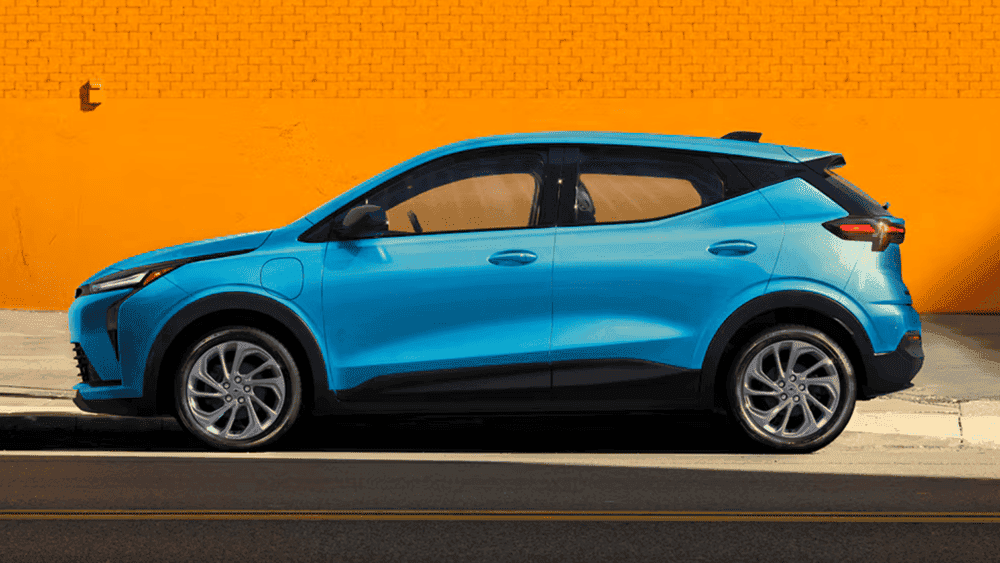
Seven exterior paint colors and three available 17-inch wheel finishes provide several exterior configurations. The 2027 Chevrolet Bolt also introduces an RS trim to the 2027 Chevrolet Bolt range for the first time. RS-specific details include unique grille badging, high-gloss black wheels, and high-gloss black roof rails. An exclusive RS color combination pairs an Atomic Yellow exterior with red interior accent stitching. These details distinguish the RS while retaining the compact hatchback body format and underlying technical layout of the 2027 Chevrolet Bolt.
Interior Comfort, Technology, Utility, and Safety
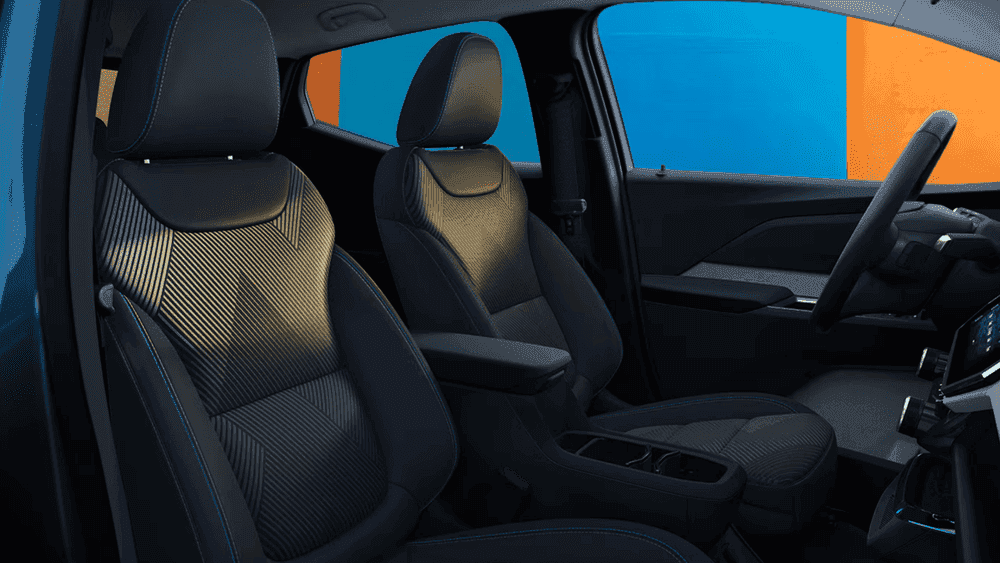
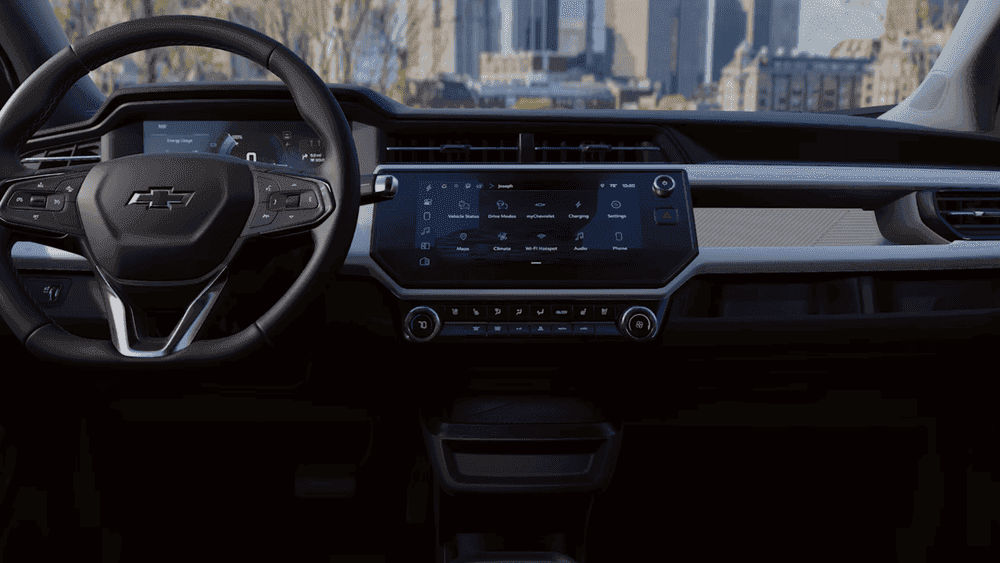
The 2027 Chevrolet Bolt arranges its primary displays and controls around a driver-focused interior layout. An 11.3-inch-diagonal center infotainment screen works alongside an 11-inch-diagonal driver information center with a user-configurable display. A column-mounted shifter frees usable space between the front seats, while open areas below the instrument panel and center console provide additional storage. Physical and virtual controls share the dashboard, allowing functions such as cabin temperature and audio volume to remain directly accessible. An available panoramic sunroof adds natural light without changing the listed second-row headroom measurement.
Passenger Space and Cargo Capacity
The cabin provides 96.6 cubic feet of EPA passenger volume. Front-row headroom measures 40 inches without the available sunroof and 39.1 inches with it, while second-row headroom remains 37.8 inches in either configuration. Maximum front legroom is 44.3 inches, and rear legroom measures 39.1 inches. Shoulder room measures 54.6 inches in front and 52 inches in the rear, while hip room measures 51.3 inches and 50.1 inches, respectively. These dimensions define the passenger space available within the compact exterior footprint of the 2027 Chevrolet Bolt.
Cargo capacity measures 16.2 cubic feet behind the rear seat. Folding the rear seat expands the available cargo volume to 56.3 cubic feet, subject to applicable weight and load-distribution limits. The hatchback layout provides a direct opening to the cargo compartment for loading and unloading. Open storage below the dashboard and between the front seats supplements the rear cargo area. The column-mounted shifter contributes to this arrangement by removing the gear selector from the center console.
Available comfort equipment includes heated and ventilated front seats and a heated steering wheel. Multiple USB-C ports support compatible devices throughout the cabin, while available wireless charging accommodates one compatible mobile device. The dashboard also incorporates new passenger-side storage for additional small-item organization. Frequently used climate and audio functions retain physical controls for direct access. Together, these features address temperature comfort, device management, control accessibility, and cabin organization.
Connected Infotainment and Driver Information
Google built-in integrates navigation, voice assistance, downloadable applications, and other connected functions into the infotainment system. Embedded Google Maps of the 2027 Chevrolet Bolt can account for the estimated battery range when planning a route. On longer trips, the system can recommend charging stops and calculate range estimates based on driving style. It also receives charging-station status information and can initiate battery preconditioning when a compatible DC fast charger appears along the planned route. These connected functions require applicable service plans, accounts, and connectivity.
“Hey Google” voice assistance can manage cabin temperature, seat warmers, voice-to-text functions, and hands-free telephone calls. Compatible smart-home integration can also support commands such as opening a connected garage door as the vehicle approaches home. When the 2027 Chevrolet Bolt is parked or charging, available applications include Angry Birds, Chrome, GameSnacks, HBO Max, Tubi, and Prime Video. Drivers can download additional compatible applications through Google Play. Entertainment and browsing functions depend on applicable service plans, connectivity, vehicle operating mode, and application availability.
Available Super Cruise® driver-assistance technology works with Google Maps to identify compatible routes and estimate the portion of a trip that supports hands-free operation. Its navigation integration can help guide the vehicle toward the appropriate lane at interchanges and exit ramps. Super Cruise® availability begins later and requires an active plan or trial for continued operation. The driver must remain attentive and must not use a handheld device while the system operates. Road compatibility and operating conditions determine when hands-free assistance is available.
Safety and Driver-Awareness Equipment
The 2027 Chevrolet Bolt includes more than 20 standard safety and driver-assistance features. Listed standard systems include Adaptive Cruise Control, Front Pedestrian Braking, Lane Keep Assist with Lane Departure Warning, Side Bicyclist Alert, Intersection Automatic Emergency Braking, Blind Zone Steering Assist, and IntelliBeam® automatic high beams. Rear Automatic Braking and Rear Cross Traffic Alert with Braking provide additional monitoring and intervention functions around the back of the vehicle. A Safety Alert Seat and Rear Seat Reminder also come standard. These technologies assist the driver but do not replace attentive vehicle operation or responsible responses to traffic and road conditions.
The standard airbag configuration includes frontal and seat-mounted side-impact airbags for the driver and front passenger. Roof-rail-mounted head-curtain airbags cover the outboard seating positions, and a passenger-sensing system supports the front passenger airbag arrangement. A Tire Pressure Monitoring System includes a tire-fill alert to assist with inflation checks. An available Tech Package adds an HD Rear Vision Camera Mirror, HD Surround Vision, and Traffic Sign Recognition. Visibility, weather, traffic, and road conditions can affect the operation of driver-assistance and camera-based systems.
Visit Friendship Chevrolet GMC of Forest City near Ruth, NC
Schedule a test drive with Friendship Chevrolet GMC of Forest City near Ruth, NC, to experience the electric performance and compact handling characteristics of the 2027 Chevrolet Bolt. Our team can demonstrate the configurable displays, Google built-in functions, cabin controls, and available driver-assistance technology. A test drive also provides an opportunity to assess passenger comfort, steering response, regenerative braking, and hatchback utility. We can explain the available charging methods and review the vehicle’s safety and convenience features. Contact our team to arrange a time to evaluate the 2027 Chevrolet Bolt in person.