
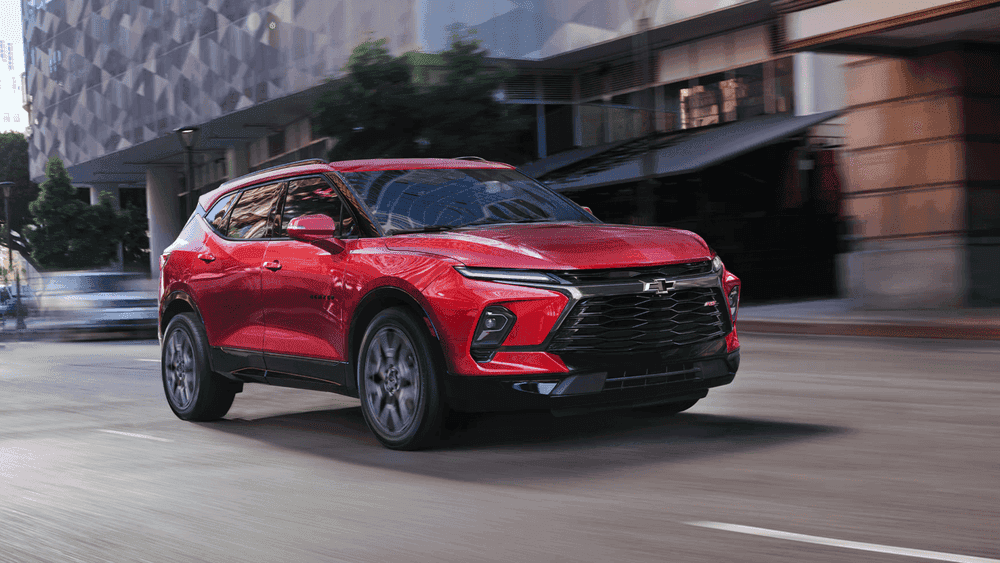
2026 Chevrolet Blazer near Shelby, NC
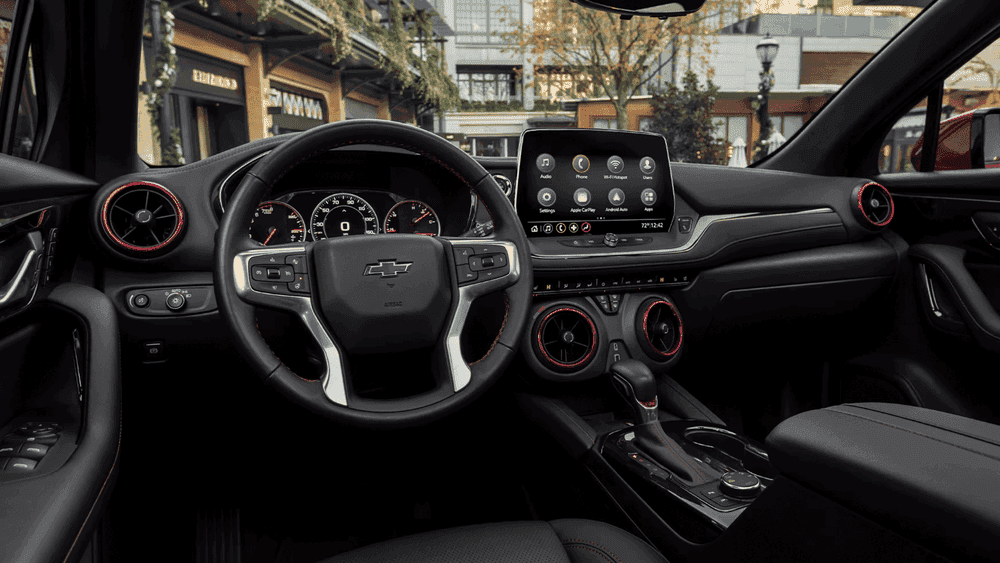
The 2026 Chevrolet Blazer offers two engine choices, nine-speed automatic transmissions, independent front and rear suspension, and a passenger compartment with configurable cargo space. Its powertrain lineup includes a 2.0L turbocharged four-cylinder engine and a 3.6L engine, with front-wheel-drive and all-wheel-drive configurations. Engine outputs range from 228 to 308 horsepower, and properly equipped models provide trailering capacities of up to 4,500 pounds. Standard equipment includes Chevy Safety Assist, an HD Rear Vision Camera, and a Tire Pressure Monitor System with Tire Fill Alert. Its technical specifications cover engine construction, transmission gearing, chassis components, passenger dimensions, cargo capacity, and standard and available safety technology.
Engine Engineering and Powertrain Specifications
The 2026 Chevrolet Blazer offers two engines that use direct, high-pressure fuel injection and electronic throttle control. Both feature dual overhead camshafts and four valves per cylinder. Both engines also include automatic stop/start technology. Chevrolet pairs each engine with a Hydra-Matic nine-speed automatic transmission. Each powertrain has its own output ratings and final drive ratio, while fuel economy and trailering specifications also depend on drivetrain configuration.
2.0L Turbocharged Four-Cylinder Engine
The 2.0L turbocharged inline-four produces 228 horsepower at 5,000 rpm and 258 lb.-ft. of torque from 1,500 to 4,000 rpm. Its block uses high-pressure die-cast aluminum with cast-in-place liners. The cylinder head also uses cast aluminum. The valvetrain incorporates dual overhead camshafts, four valves per cylinder, and a tripower system. Bore and stroke measure 3.27 by 3.63 inches, or 83 by 92.3 millimeters. Direct, high-pressure fuel injection works alongside electronic throttle control within the engine’s fuel delivery system.
3.6L Engine and Transmission Hardware
The 3.6L engine delivers 308 horsepower at 6,700 rpm and 270 lb.-ft. of torque at 5,000 rpm. Chevrolet constructs its block from cast aluminum with cast-in-place iron bore liners. The cylinder heads also use cast aluminum. Its dual-overhead-camshaft valvetrain includes four valves per cylinder and continuously variable valve timing. Bore and stroke measure 3.74 by 3.37 inches, or 95 by 85.8 millimeters. Like the 2.0L engine, the 3.6L uses direct, high-pressure fuel injection and electronic throttle control.
The 2.0L turbocharged engine pairs with the Hydra-Matic 9T60 nine-speed automatic transmission. The 3.6L engine pairs with the Hydra-Matic 9T65 nine-speed automatic. Both transmissions use a 4.69:1 first gear, a 3.31:1 second gear, and a 3.01:1 third gear. Fourth through sixth gear ratios measure 2.44:1, 1.92:1, and 1.44:1, respectively. The seventh gear uses a 1.00:1 ratio, followed by 0.75:1 in eighth and 0.62:1 in ninth. Both transmissions use a 2.96:1 reverse ratio, while final drive ratios measure 3.47 for the 2.0L powertrain and 3.49 for the 3.6L powertrain.
Fuel Economy and Trailering Capability
EPA-estimated fuel economy for the 2026 Chevrolet Blazer varies by engine and drivetrain. The 2.0L turbocharged front-wheel-drive configuration carries estimates of 22 mpg city and 29 mpg highway. With all-wheel drive, the 2.0L engine carries estimates of 22 mpg city and 27 mpg highway. The 3.6L front-wheel-drive configuration carries estimates of 19 mpg city and 26 mpg highway. The 3.6L all-wheel-drive configuration carries estimates of 18 mpg city and 26 mpg highway.
Fuel Capacity and Base Curb Weight
Front-wheel-drive 2026 Chevrolet Blazer models have an approximate fuel tank capacity of 19.4 gallons, or 73.4 liters. All-wheel-drive models have an approximate capacity of 21.7 gallons, or 82.1 liters. Base curb weight depends on the trim, engine, and drivetrain combination. LT models with the 2.0L turbocharged engine weigh 3,918 pounds with front-wheel drive and 4,144 pounds with all-wheel drive. LT models with the 3.6L engine weigh 4,020 pounds with front-wheel drive and 4,249 pounds with all-wheel drive.
RS models with the 3.6L engine have base curb weights of 4,079 pounds with front-wheel drive and 4,313 pounds with all-wheel drive. Premier models with the 2.0L turbocharged engine weigh 3,992 pounds in front-wheel-drive form. The corresponding all-wheel-drive Premier configuration weighs 4,218 pounds. Premier models with the 3.6L engine weigh 4,093 pounds with front-wheel drive. With all-wheel drive and the 3.6L engine, the Premier has a base curb weight of 4,322 pounds.
Trailering Packages and Capacity
Front-wheel-drive models with either engine provide a trailering capacity of 1,500 pounds without the trailering package. The 2.0L front-wheel-drive configuration can tow up to 3,250 pounds with the available trailering package. The 2.0L all-wheel-drive configuration provides a 3,250-pound capacity with its standard trailering package. The 3.6L front-wheel-drive configuration can tow up to 4,500 pounds with the available trailering package. The 3.6L all-wheel-drive configuration provides the same 4,500-pound capacity with its standard trailering package. Passenger weight, cargo, and options can reduce the amount the vehicle can tow, so operators should review the Owner’s Manual trailering instructions before towing.
Disclaimer: EPA estimated for FWD and 3.6L V6 engine.

Suspension Steering and Braking Systems
The 2026 Chevrolet Blazer uses independent suspension at both axles. Its MacPherson® strut front suspension incorporates a hydraulic control arm ride bushing and a hollow stabilizer bar. The five-link independent rear suspension also includes a hollow stabilizer bar. Electric variable-effort power steering features Active Return Assist. The 2026 Chevrolet Blazer has a turning circle of 38.7 feet, or 11.8 meters.
Four-Wheel Disc Braking Hardware
Chevrolet equips the 2026 Chevrolet Blazer with a power-assisted, four-wheel-disc variable brake system. The system uses Duralife™ brake rotors. It also includes low-drag brake calipers. Front brake rotors measure 12.64 inches, or 321 millimeters. Rear brake rotors measure 12.40 inches, or 315 millimeters.
Wheels Tires and Redline Edition Equipment
LT models come standard with 18-inch aluminum wheels, while RS and Premier models come standard with 20-inch aluminum wheels. The available Redline Edition includes 20-inch aluminum wheels on LT models. Chevrolet also offers 21-inch aluminum wheels on RS and Premier. Tire specifications include P235/65R18 all-season tires for the 18-inch wheel size. The other listed sizes are P235/55R20 and P265/45R21, both with all-season tires. For 2026, Chevrolet makes the Redline Edition available with the Iridescent Pearl Tricoat exterior color.
Exterior Dimensions Passenger Space and Cargo Utility
The 2026 Chevrolet Blazer has a wheelbase of 112.7 inches and an overall length of 191.8 inches. Its overall width measures 76.7 inches without mirrors. Overall height measures 67 inches. The front track width measures 66.4 inches, and the rear track width measures 66.2 inches. The passenger compartment provides an EPA passenger volume of 107.8 cubic feet, or 3,053 liters.
Front and Rear Passenger Dimensions
The front seating area provides 41 inches of legroom, and the rear seating area provides 39.6 inches. Shoulder room measures 59.1 inches in front and 58.6 inches in the rear. The front hip room measures 55.6 inches, while the rear hip room measures 54.2 inches. Without a sunroof, headroom measures 39.8 inches in front and 38.6 inches in the rear. With a sunroof, headroom measures 38 inches in front and 36.8 inches in the rear. These roof-specific measurements identify the headroom available in each configuration.
Cargo Volume and Rear Seat Configuration
The 2026 Chevrolet Blazer provides 30.5 cubic feet of cargo volume behind the rear seat. This configuration retains the rear seat for passenger use. Folding the rear seat increases cargo volume to 64.2 cubic feet. The corresponding metric capacities measure 864 liters behind the rear seat and 1,818 liters with the rear seat folded. Cargo and load capacity remain subject to weight and distribution limits.
Standard Safety and Available Driver Assistance
Chevy Safety Assist comes standard on the 2026 Chevrolet Blazer. The package includes Automatic Emergency Braking and Front Pedestrian Braking. Lane Keep Assist with Lane Departure Warning also forms part of the standard package. The Following Distance Indicator and Forward Collision Alert add to its driver assistance equipment. IntelliBeam® auto high beams complete the package. These systems do not replace the driver’s responsibility to operate the vehicle safely, and drivers should review the Owner’s Manual for operating information and feature limitations.
Airbags and Occupant Restraints
The 2026 Chevrolet Blazer includes frontal and seat-mounted side-impact airbags for the driver and front passenger. A knee airbag serves the driver position. Head-curtain airbags cover the front and rear outboard seating positions. The airbag equipment also includes a Passenger Sensing System. Occupants should always use seat belts and appropriate child restraints, with children properly secured in a rear seat.
Camera Systems and Tire Pressure Monitoring
An HD Rear Vision Camera comes standard on the 2026 Chevrolet Blazer. The standard Tire Pressure Monitor System includes a Tire Fill Alert. Tire pressure monitoring excludes the spare tire. Adaptive Cruise Control is available on all trims. Enhanced Automatic Emergency Braking is also available across the trim lineup.
The Driver Confidence II package is available on RS and Premier models. This package includes HD Surround Vision. It also includes a Rear Camera Mirror. Adaptive Cruise Control and Enhanced Automatic Emergency Braking form part of the package’s equipment. A Safety Alert Seat completes the listed Driver Confidence II features.
Visit Friendship Chevrolet GMC of Forest City for a Test Ride
Schedule a test drive of the 2026 Chevrolet Blazer with our team at Friendship Chevrolet GMC of Forest City near Shelby, NC. We can help you review engine choices, drivetrain configurations, and trailering equipment. During your drive, assess the vehicle’s performance, steering, handling, and passenger comfort. Our team can also explain the standard safety technology and available driver assistance features on the configuration you are considering. Contact us to arrange your visit and examine the passenger space, cargo flexibility, and equipment of the 2026 Chevrolet Blazer in person.